“Joy Is Not Naive, It’s Radical”

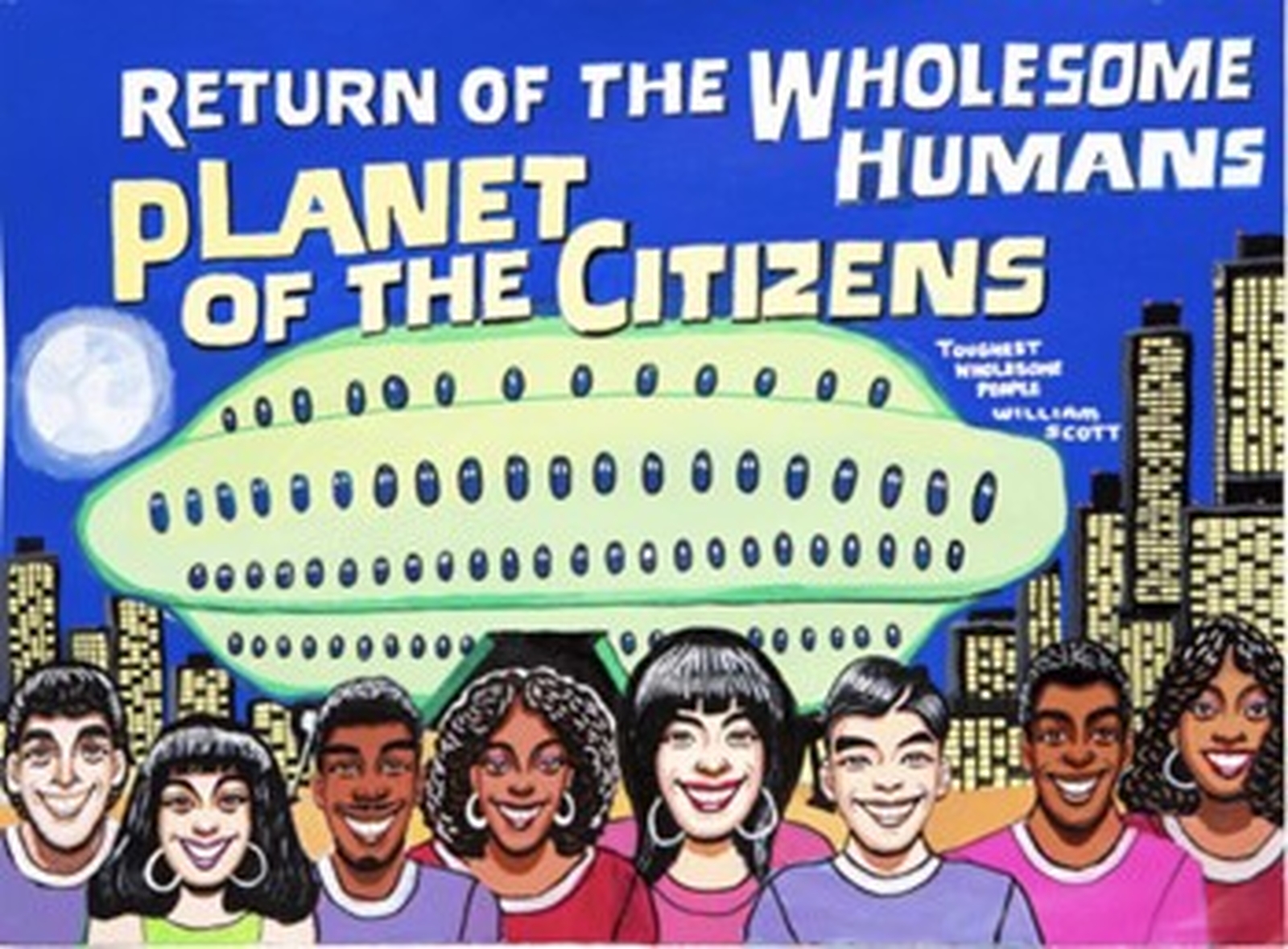
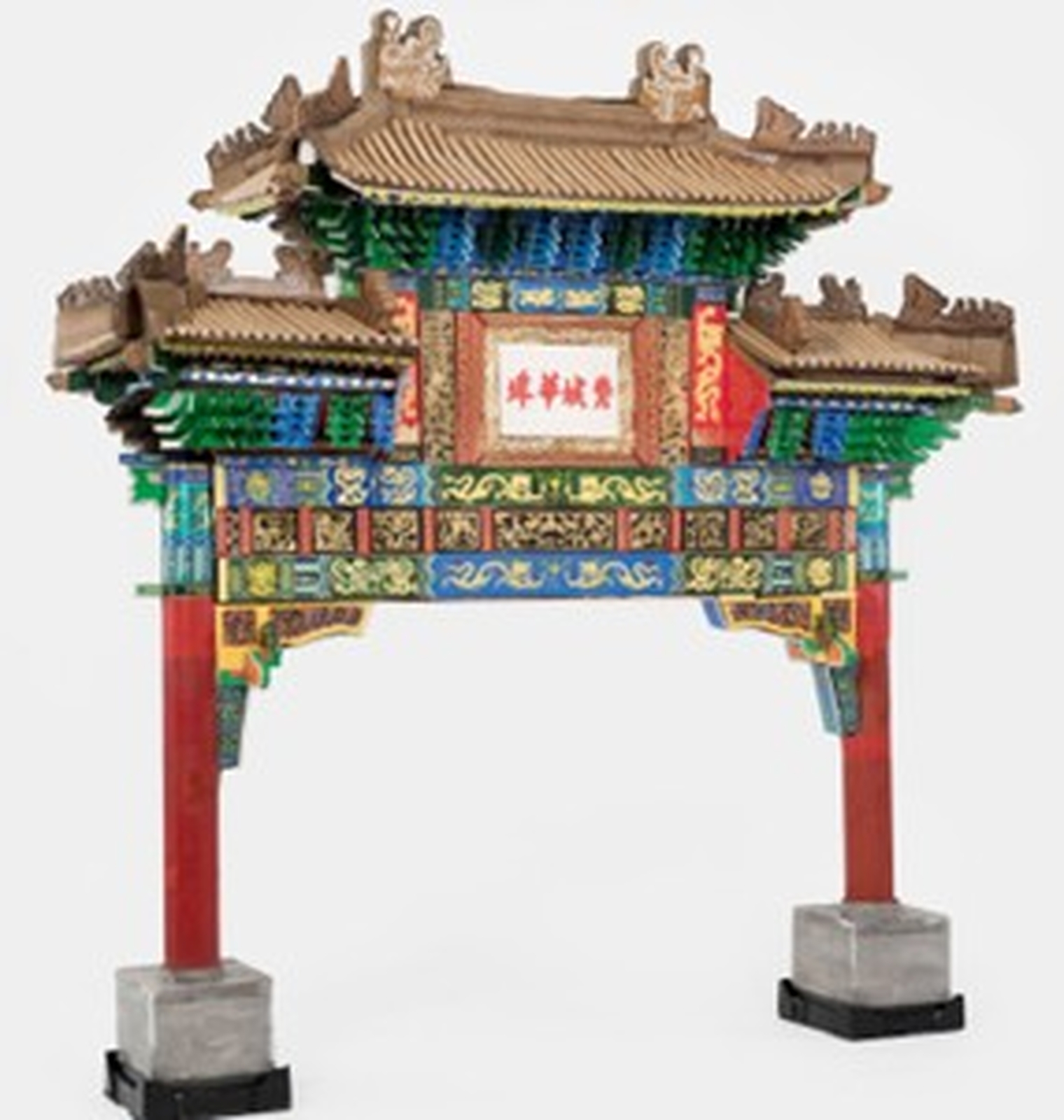
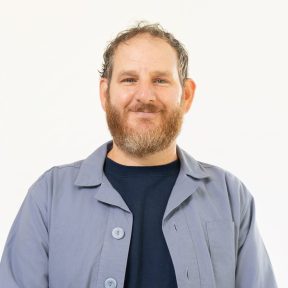
Daniel Fuller G’04, curator of Possible Worlds: 20 Years of the Wynn Newhouse Awards, joined us on Wednesday, February 4 to discuss his experience curating the landmark exhibition. He laughed a lot during his virtual talk and he also got a little choked up. That mix of joy and tenderness ran through the entire evening.

Image of Daniel Fuller, curator of Possible Worlds.

Fuller, a Syracuse University Museum Studies alum who now serves as Director of Curation at the National Center for Civil and Human Rights, has dedicated much of his career working with artists with disabilities. He described visiting art centers like NIAD Art Center and Creative Growth as stepping into “kind of paradise” with rooms full of art supplies, music, and people making work with infectious energy.

He shared a favorite memory from The Art Department in Portland, Maine: “They break every day at 2:30 to bring a boombox out to the sidewalk and dance to Shakira. Everyone in town knows that at 2:30, the dance party happens.”

That joy carries into Possible Worlds. Fuller spoke about Reverend Joyce McDonald, whose sculptures and paintings featured in the exhibition, insist that “joy is not naive, it’s radical.”

Joy is a fitting frame an exhibition that refuses to flatten its artists into a single narrative and is one of several threads that run through Possible Worlds. As Fuller says, “Disability is present, it’s acknowledged, it’s respected, but it’s not seen as a curatorial shorthand.”

Possible Worlds is on view at the Syracuse University Art Museum through May 9, 2026.

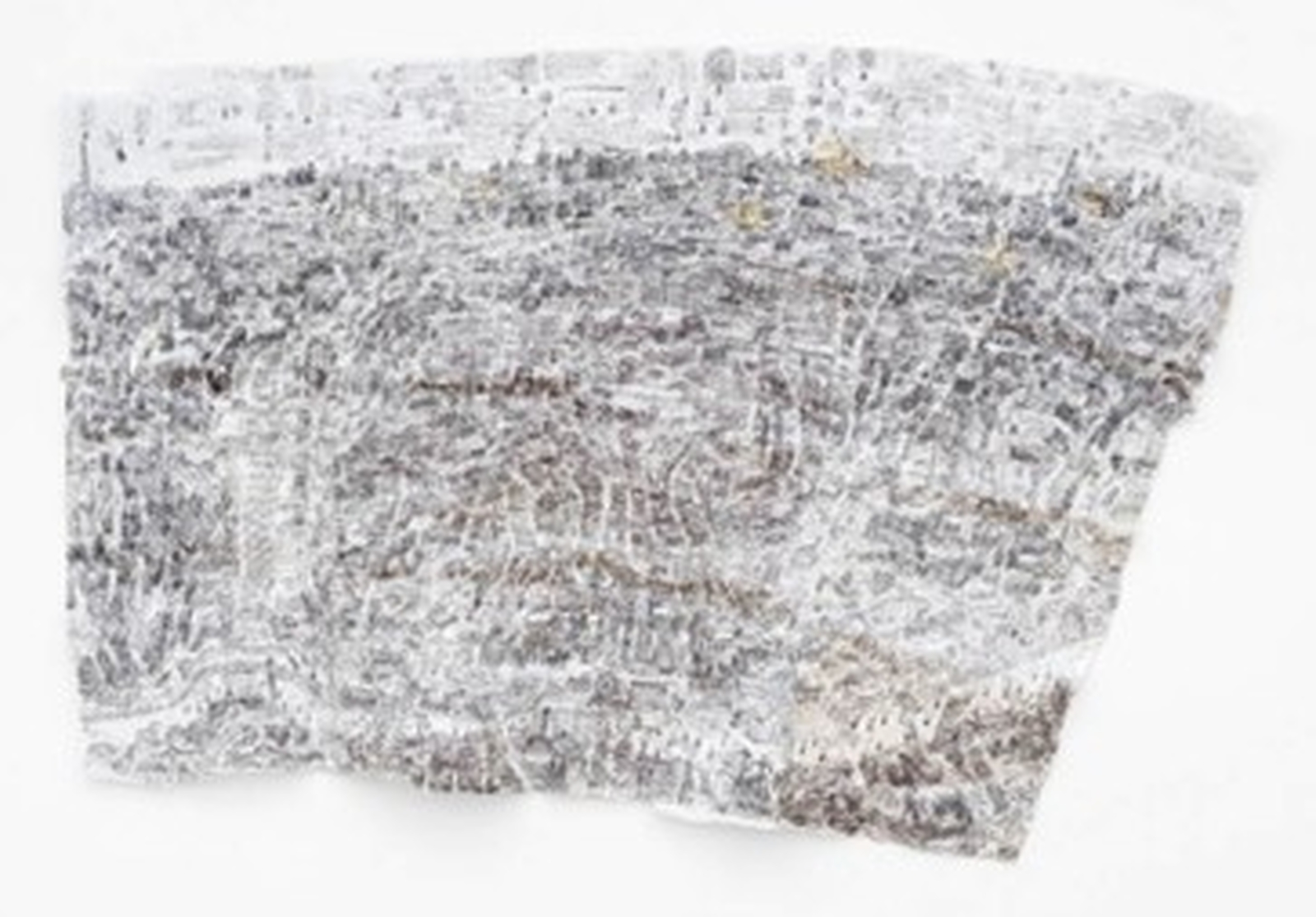
Reflecting on Peter Milton’s mind-bending “Hotel Paradise Cafe”

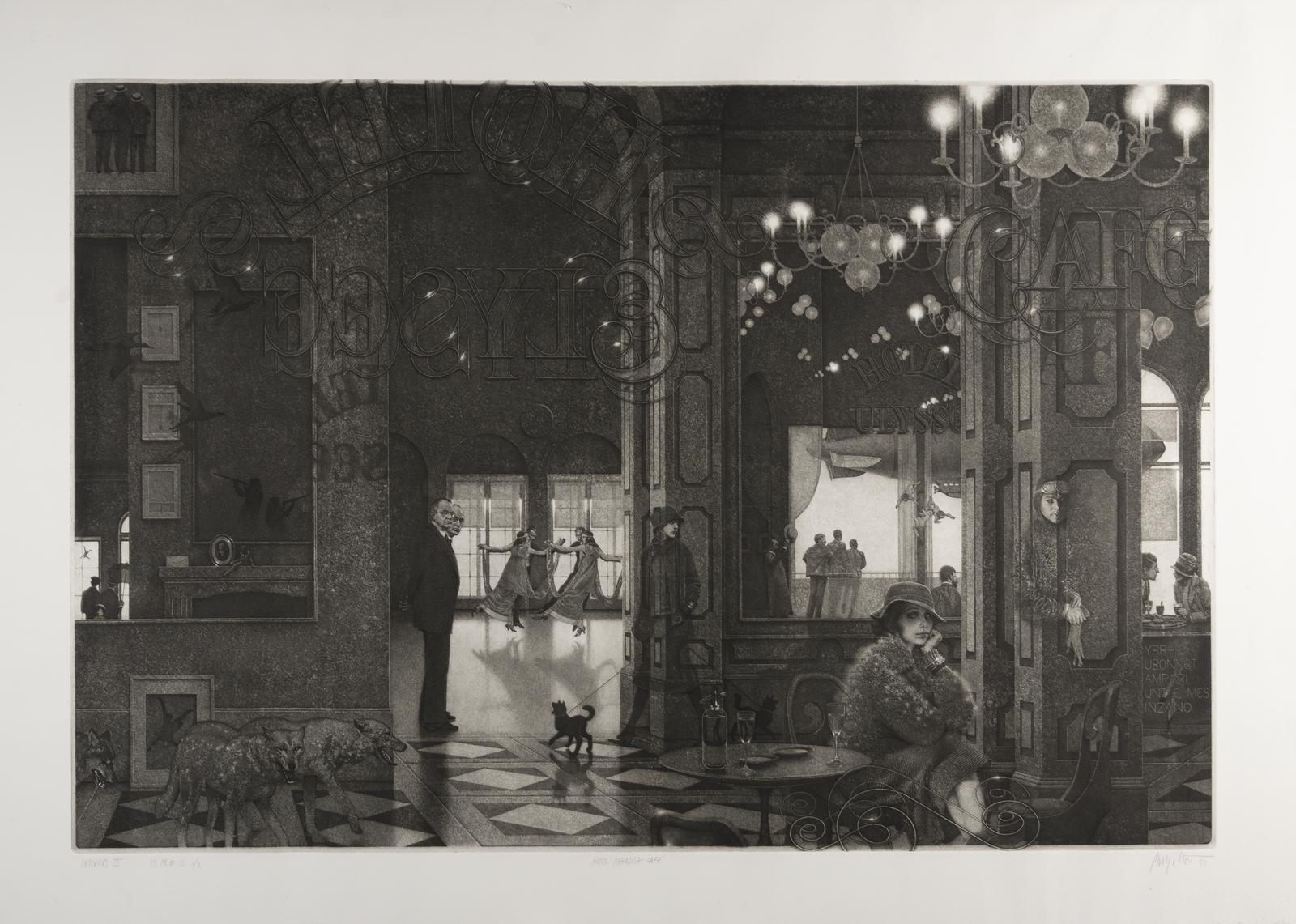
"Hotel Paradise Cafe", 1987. Peter Milton (born 1930). Resist-ground etching and engraving. Gift of John & Sabina Szoke. “Hotel Paradise Cafe”, 1987. Peter Milton (born 1930). Resist-ground etching and engraving. Gift of John & Sabina Szoke.

Standing before Peter Milton’s “Hotel Paradise Café”, you can easily find yourself lost in the best possible way. At first glance, Milton’s 1987 work presents what appears to be a simple, representation of a hotel lobby; however quickly you will find yourself tracking the labyrinthine interior where mirrors reflect mirrors and realities bend. Its disorienting, mesmerizing imagery is the perfect catalyst for teaching in Associate Professor and former SU Art Museum Faculty Fellow Lyndsay Gratchs digital performance course in the College of Visual and Performing Arts’ Department of Communication and Rhetorical Studies.

Peter Milton (born 1930) is renowned for his incredibly detailed prints that blend memory, dream, and reality. This resist-ground etching and engraving, donated to the SU Art Museum in 2023 by John and Sabina Szoke, is more than just a stunning display of technique. It is one of the jumping off points for students to examine perspective and experience in Gratch’s course, CST 314: Performance Studies: Digital Performance in Everyday Lives.

“We routinely welcome classes into the galleries and our Study Room, creating opportunities for students to study artworks firsthand,” says Melissa Yuen, curator. “To encourage teaching innovation, we also developed a Faculty Fellows program, which is now in its fourth year.”

“[Milton’s use of mirrors and reflections invites] a critical analysis of the viewer’s own perspectives and positionalities, in addition to recognizing that knowledge is not objective or neutral,” Gratch explains. ‘Thus, reflexibility calls for a deeper level of self-awareness and critical thinking about historical contexts, contemporary and historical power structures, and personal biases.”

Just as Milton’s mirrors force viewers to question what exactly they are looking at, Gratch asks students to question their own viewing position. In an age of social media, misinformation, and AI-generated content, understanding how we construct and consume images has never been more important.

Want to see this artwork for yourself?

“Interiors IV: Hotel Paradise Café” will be featured in “New In: Recent Acquisitions at the SU Art Museum,” opening February 9, 2026 at the Bernard and Louise Palitz Gallery in New York City.

Discovering the Depth of the Syracuse University Art Museum Collection

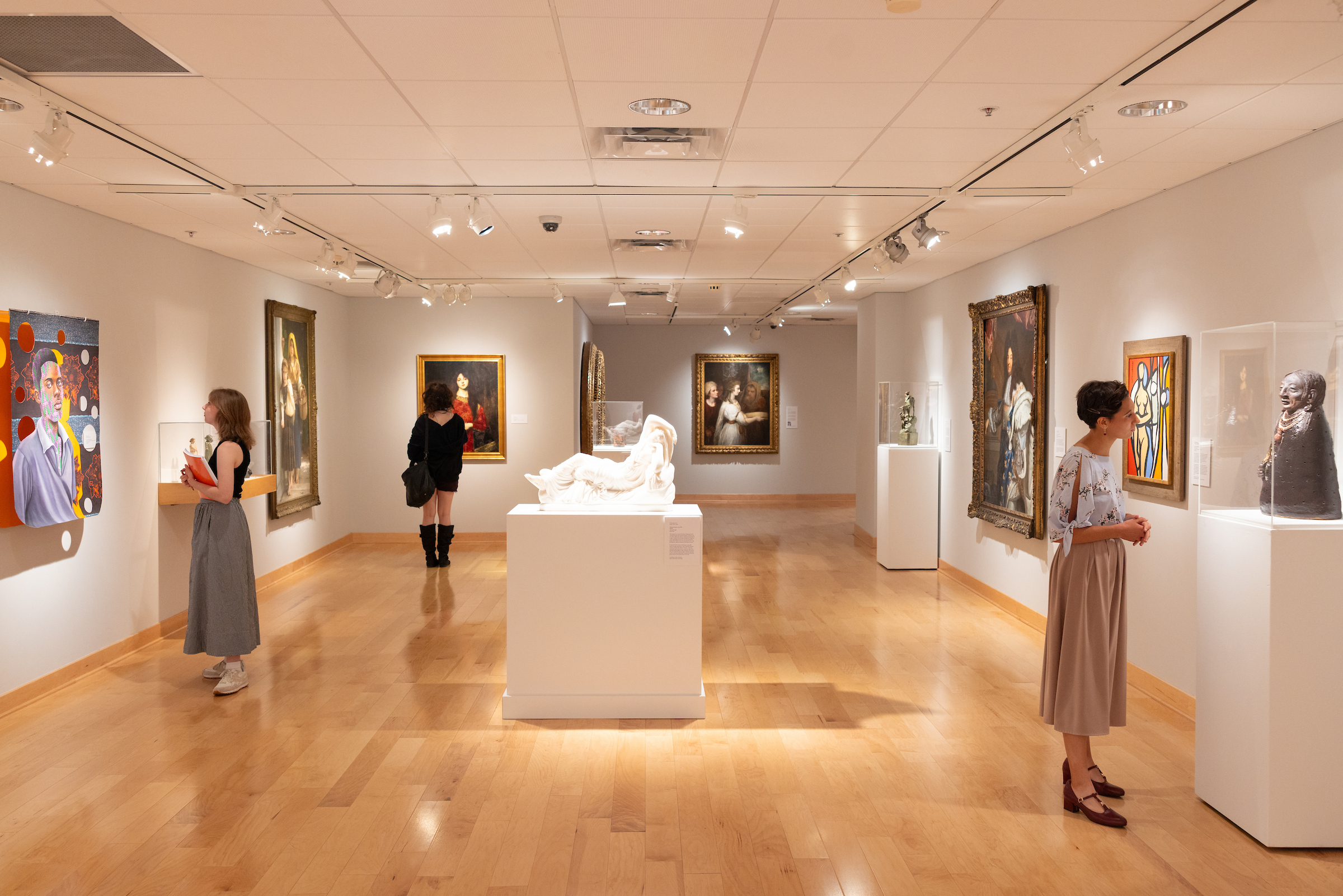
Hidden within the Syracuse University Art Museum’s collection are ancient Etruscan vessels, contemporary photographs, Renaissance paintings and modernist sculptures — more than 45,000 objects waiting to be discovered.

The museum ranks as one of the top 10 academic art collections in the country by collection size, spanning media such as painting, prints, photography and sculpture. It is not uncommon for museums with large collections to display only a fraction of their holdings at any given time, and many have made strides toward digitizing collections to increase accessibility on a global scale.

Since 2019, the Syracuse University Art Museum has hosted a free-to-use online platform called eMuseum: a living repository of information and imagery about our collection. Assistant Registrar Abby Campanaro updates the database daily, and along with Registrar Victoria Gray and graduate collections assistants, more of the museum’s collection is becoming visible online.

Within the eMuseum, visitors can search by artist, exhibition, collection or keyword. For researchers or the hyper-curious, an advanced search function allows you to narrow down the collection to display, for example, only oil paintings made between 1960 and 1980. The eMuseum will also generate a list of similar artworks to the one you are viewing, allowing for further discovery of pieces you may not have found otherwise.

“The eMuseum is an exciting, innovative tool that really opens the doors to our collection,” Campanaro says. “Whether someone is a student looking for a topic for their next essay or just a curious art lover, there’s something for everyone to discover.”

Ready to explore? Visit the Syracuse University Art Museum eMuseum at onlinecollections.syr.edu to start your journey through thousands of artworks from around the world and across the centuries. The collection is free to search and available 24/7.

Taylor Westerlund ,
Communications & Outreach Specialist,
Syracuse University Art Museum